


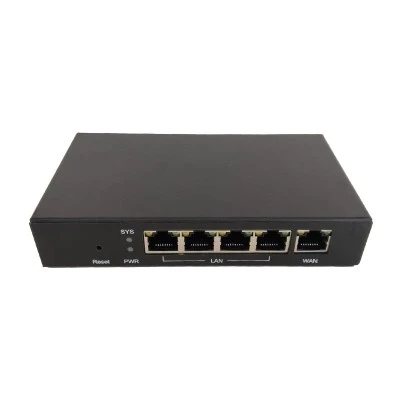
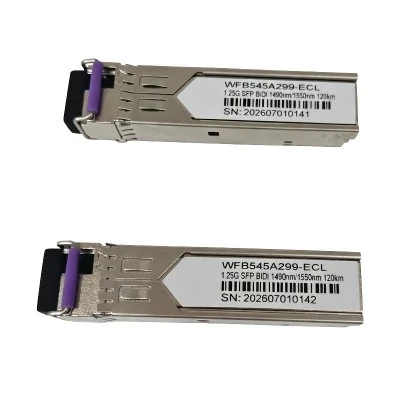

The Optical Line Terminal (OLT) is one of the core devices in a fiber-optic communication network. Primarily used to facilitate the access, aggregation, and distribution of optical signals, it serves as a critical node in broadband access networks such as Fiber-to-the-Home (FTTH) and Fiber-to-the-Building (FTTB). For the products mentioned above, please click below to view detailed technical specifications.
Its core function involves converting electrical signals into optical signals and transmitting them via fiber optics to user-side equipment (such as Optical Network Units/ONUs or Optical Network Terminals/ONTs); simultaneously, it receives optical signals returning from the user side and converts them back into electrical signals, thereby enabling bidirectional communication.
An OLT typically consists of an optical transmission module, a user interface module, a service processing module, and a system management module. The optical transmission module is responsible for the transmission, reception, and conversion of optical signals, supporting the transmission of signals at various wavelengths (e.g., 1310 nm, 1490 nm, 1550 nm). The user interface module provides connectivity interfaces for user-side equipment, supporting multiple access technologies (such as EPON and GPON). The service processing module handles packet classification, forwarding, and Quality of Service (QoS) management, while the system management module is responsible for the configuration, monitoring, and maintenance of the device.

