


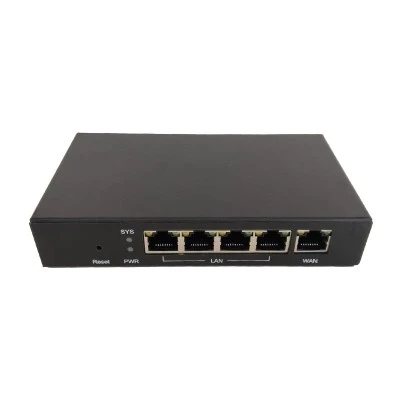

An LTE router is a network device designed to meet the demand for reliable, stable, and high-speed wireless communication within industrial environments, supporting functions such as remote monitoring, fault diagnosis, and data transmission. Compared to traditional home or commercial routers, LTE routers are capable of operating stably in harsh industrial conditions-including high temperatures, low temperatures, humidity, and vibration-and feature industrial-grade characteristics such as wide operating temperature and voltage ranges, as well as high ingress protection ratings. Their core components typically comprise an LTE module, a router core, external interfaces, antennas, and a power supply module; furthermore, they integrate security features-such as firewalls, VPNs, and data encryption-to safeguard the security of data transmission. LTE (Long-Term Evolution) technology offers wireless communication capabilities that are faster and more stable than traditional 3G networks, thereby satisfying the industrial sector's need for the rapid exchange of large volumes of data between devices.
LTE routers are widely deployed across various sectors, including electric power, water conservancy, transportation, finance, environmental protection, smart parcel lockers, EV charging stations, remote video surveillance, and the Industrial Internet of Things (IIoT). Acting as a critical bridge connecting upper-layer data centers with lower-layer sensor networks, these devices facilitate device connectivity, data acquisition, and remote management.
LTE routers typically feature high reliability and intelligent management capabilities, supporting dual-SIM redundancy and multi-link backup to ensure continuous network availability. They incorporate a built-in hardware watchdog that automatically triggers a system restart and recovery in the event of an anomaly. Additionally, they support remote configuration, monitoring, and troubleshooting, allowing for centralized management via a cloud-based platform. Certain high-end models also offer advanced capabilities such as edge computing, protocol conversion, and SD-WAN-based multi-site networking, designed to meet the complex requirements of sophisticated industrial applications.

