


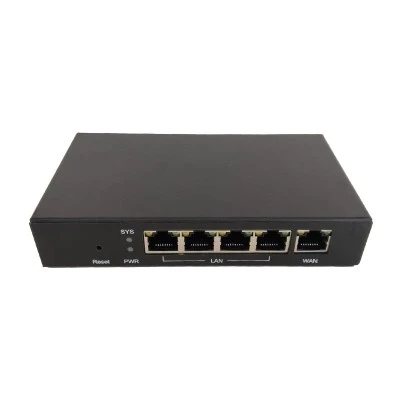

An Ethernet extender is a network device designed to extend the transmission distance of Ethernet signals. It is primarily deployed in industrial systems-such as factory automation, wastewater treatment, and the oil and gas sectors-as well as in fields like smart cities and rail transit. Utilizing technologies such as VDSL2, the device enables signal transmission over existing cabling infrastructure, including twisted-pair and telephone lines.
This device offers a maximum transmission distance of up to 3.2 kilometers and supports a bandwidth exceeding 120 Mbps. Certain models are capable of transmitting telephone signals concurrently with network signals, or they support Power over Ethernet (PoE) extension, allowing them to operate without the need for an external power supply. These products typically feature characteristics such as wide-temperature operation and high ingress protection ratings, enabling them to withstand harsh industrial environments.
The primary objective of an Ethernet extender (or PoE switch) is to overcome the traditional 100-meter transmission distance limitation of Ethernet by utilizing existing cabling infrastructure-such as twisted-pair cables or telephone lines.
Employing VDSL2 technology, these devices leverage existing cables to extend network reach, thereby enabling long-distance data transmission. When utilizing existing 24 AWG cabling, the transmission distance can be extended by up to 1,400 meters, with a maximum achievable range of 3.2 kilometers.
For models that support Power over Ethernet (PoE), the device draws power directly from the PoE Ethernet cable, eliminating the need for an external power supply. Operating in a "one-in, one-out" configuration, it extends both the data transmission range and the PoE power delivery distance between a standard Power Sourcing Equipment (PSE) device and a standard Powered Device (PD) load, effectively extending the distance between the PSE and the PD to 200 meters or even further.
These devices are typically deployed in pairs: one unit is configured as the Central Office (CO) side, while the other is configured as the Customer Premises Equipment (CPE) side; the configuration between CO and CPE modes is adjustable via DIP switches.

