


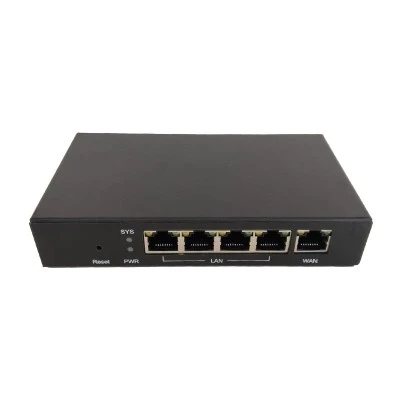
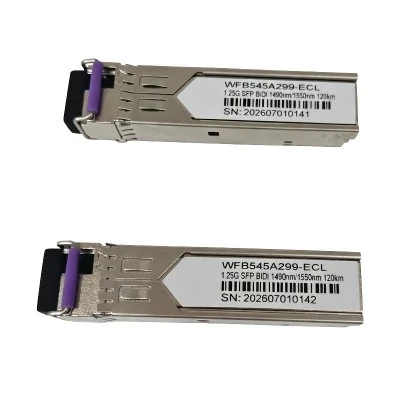

The primary objective of an Ethernet extender (or PoE switch) is to overcome the traditional 100-meter transmission distance limitation of Ethernet by utilizing existing cabling infrastructure-such as twisted-pair cables or telephone lines.
Employing VDSL2 technology, these devices leverage existing cables to extend network reach, thereby enabling long-distance data transmission. When utilizing existing 24 AWG cabling, the transmission distance can be extended by up to 1,400 meters [1], with a maximum achievable range of 3.2 kilometers.
For models that support Power over Ethernet (PoE), power is drawn directly from the PoE network cable itself, eliminating the need for an external power supply. Operating in a "one-in, one-out" configuration, these devices extend both the data transmission range and the PoE power delivery distance between a standard Power Sourcing Equipment (PSE) device and a standard Powered Device (PD) load, effectively extending the operational distance between the PSE and the PD to 200 meters or even further.
These devices are typically deployed in pairs: one unit is configured as the Central Office (CO) side, while the other is configured as the Customer Premises Equipment (CPE) side [2]; furthermore, they feature DIP switches that allow for manual configuration of the CO/CPE mode.

