


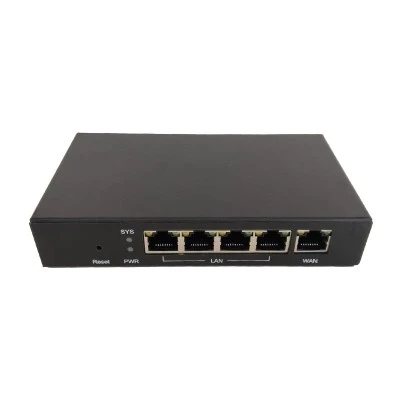

A wireless router can be likened to an advanced device that integrates the functions of a standalone wireless access point (AP) and a broadband router into a single unit. It not only possesses all the capabilities of a standard wireless AP-such as support for DHCP clients, VPNs, firewalls, and WEP encryption-but also incorporates Network Address Translation (NAT) functionality, enabling the sharing of network connections among users within a local area network (LAN). This allows for the sharing of Internet connections within a home wireless network, facilitating shared wireless access for services such as ADSL, cable modems, and community broadband networks.
A wireless router can connect directly to any ADSL or cable modem equipped with an Ethernet interface; alternatively, it can be integrated into an existing LAN infrastructure via a switch, hub, or broadband router. It features built-in virtual dial-up software capable of storing usernames and passwords to establish an Internet connection. This enables an automatic dialing function for dial-up access services-such as ADSL and cable modems-eliminating the need for manual dialing or the requirement to dedicate a specific computer to serve as a network server. Furthermore, wireless routers typically offer a more comprehensive suite of security and protection features.

